
Ergonomic Design in Professional Scissors: Protect Your Health
Repetitive strain injuries end careers. Understanding ergonomic scissor design and choosing tools that protect your hands, wrists, and shoulders isn't optional—it's essential for long-term professional success.
Why Ergonomics Matter in Professional Scissors
If you're a working professional, you might make thousands of cuts per day. Each cut involves specific hand, wrist, and arm movements. Over months and years, poor ergonomics accumulate into chronic pain, reduced dexterity, and potentially career-ending injuries.
Repetitive strain injuries like carpal tunnel syndrome, tendonitis, and chronic joint pain are alarmingly common among scissors professionals. The good news? Proper ergonomic design dramatically reduces these risks while improving comfort and control.
Understanding Hand and Wrist Strain
When using traditional straight-handled scissors, your hand and wrist maintain unnatural positions for extended periods. Your thumb works harder than necessary, your wrist bends awkwardly, and your elbow and shoulder compensate for poor alignment.
This isn't noticeable during the first few cuts of your career. But multiply those awkward positions by thousands of daily cuts over years, and the cumulative stress causes real damage. Ergonomic design addresses these issues by aligning your body's natural positions with scissor mechanics.
Handle Designs That Protect Your Health
Offset Handle Design (Recommended)
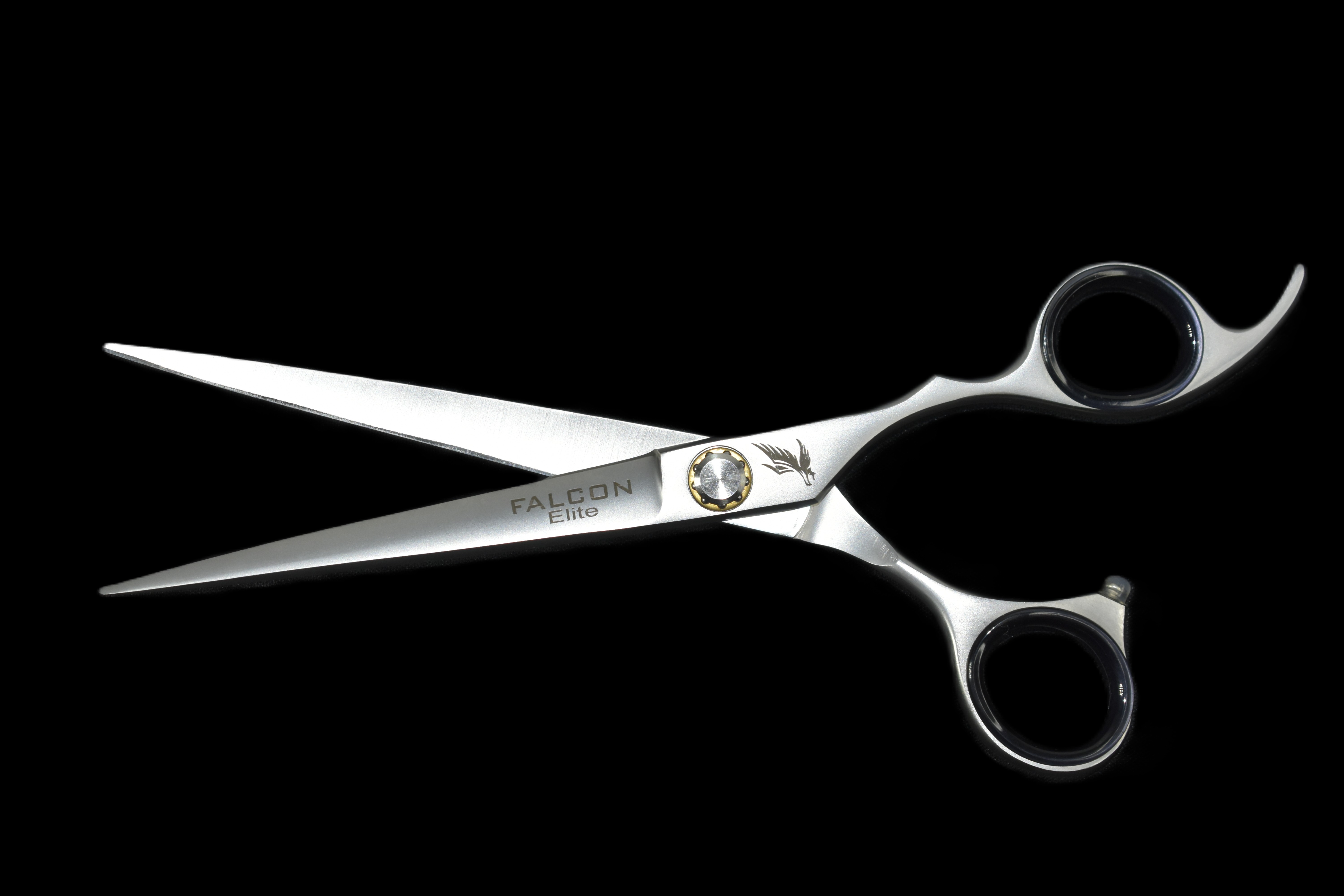
Offset handles position your thumb lower than your fingers, creating a more natural hand position that reduces wrist bend. This design allows your hand to work in a more relaxed, neutral position throughout cutting motions.
Benefits: Reduced wrist strain, lower elbow position, decreased thumb fatigue, better overall comfort during extended sessions
Crane Handle Design
Crane handles feature an extreme offset angle, dramatically lowering your elbow position. This design benefits professionals with shoulder issues or those who prefer an especially relaxed cutting stance.
Best for: Professionals with existing shoulder problems, those who cut standing for long periods
Swivel Thumb Scissors
These scissors feature a rotating thumb ring allowing 360-degree movement. Your thumb can move freely while your fingers remain stationary, dramatically reducing thumb and wrist strain during complex cutting techniques.
Best for: Professionals with existing repetitive strain issues, those performing intricate detailed work
The Role of Finger Rests
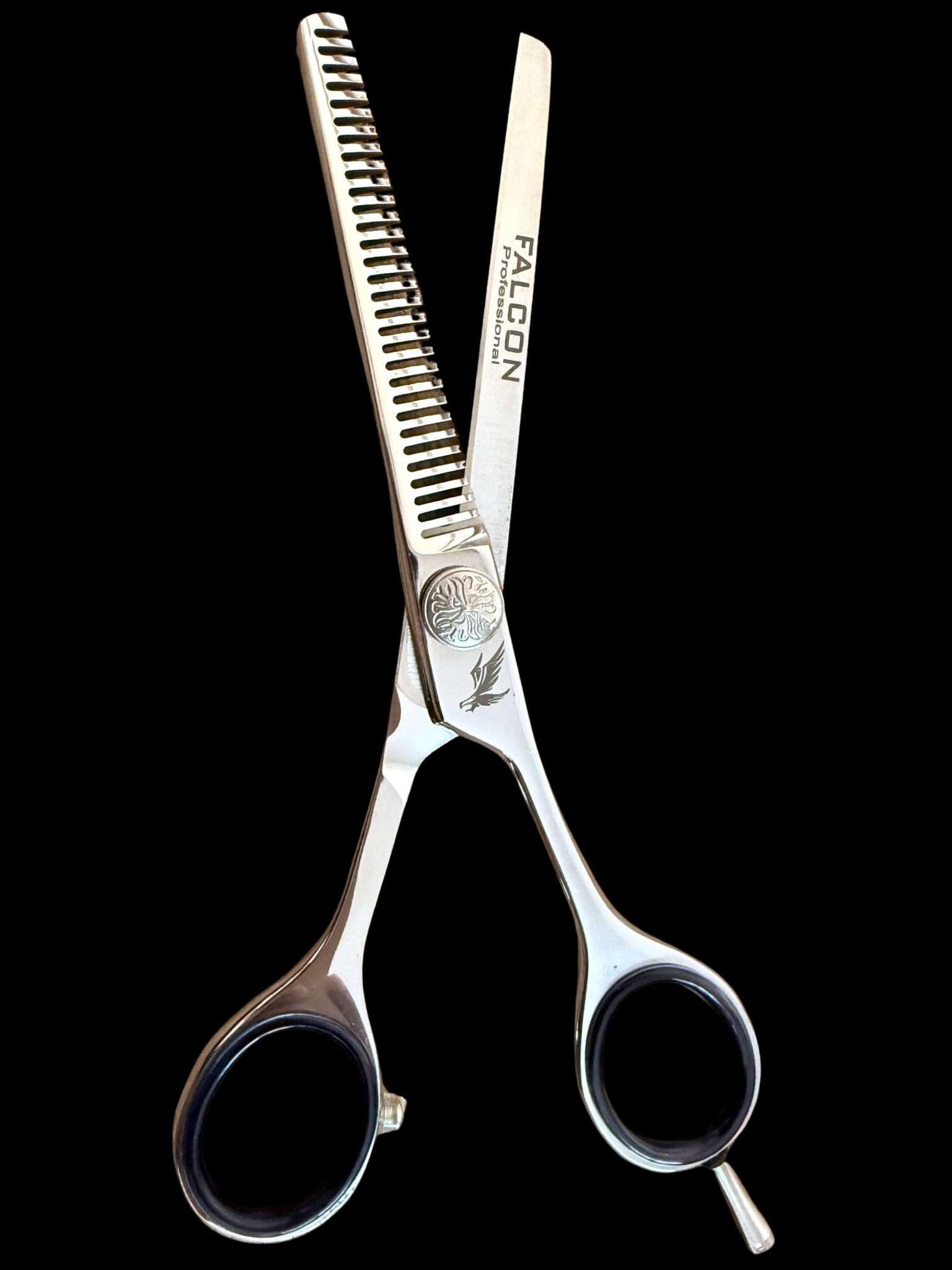
The finger rest (tang) provides additional support and control during cutting. A properly positioned finger rest helps distribute weight and reduces the grip strength needed to control scissors, decreasing overall hand fatigue.
Fixed vs. Removable Finger Rests
Fixed rests provide consistent support and are generally more durable. Removable rests allow customization for different hand sizes and cutting styles. Some professionals remove finger rests entirely, though this typically increases hand fatigue.
If you're unsure, start with a removable rest. This lets you experiment with different positions to find what works best for your hands and technique.
Weight and Balance
Scissors that are too heavy cause arm fatigue during extended use. Scissors that are too light often lack the stability needed for controlled cutting, forcing you to grip harder and work more. Proper weight and balance reduce the muscular effort needed for precise work.
Quality scissors balance weight appropriately for their size. When you hold them, they should feel stable and controlled without seeming heavy. The balance point should be near the pivot, allowing natural, effortless movement.
Ring Size and Comfort
Rings that are too tight restrict circulation and cause pressure points. Rings that are too loose require excessive grip strength to maintain control. Finding the right ring size is crucial for comfortable, fatigue-free cutting.
Finding Your Ring Size
Your fingers should slide easily into rings with slight room to spare. You should be able to rotate scissors slightly within the rings without loosening your grip. If rings leave marks on your fingers after use, they're too small.
Some scissors offer sizing inserts or adjustable rings. These allow fine-tuning for perfect fit, especially helpful if your hands swell slightly during long work days.
Recognizing Warning Signs
Don't ignore early warning signs of repetitive strain. Catching problems early prevents serious long-term damage. Pay attention to these signals:
When to Reevaluate Your Tools
- Hand or wrist pain during or after work
- Numbness or tingling in fingers
- Difficulty gripping or reduced grip strength
- Pain radiating up forearm or into shoulder
- Needing to massage hands frequently during work
- Morning stiffness in hands or wrists
If you experience any of these symptoms, consult a healthcare professional and seriously consider ergonomic scissors. Don't let pride or habits cost you your career.
Beyond Scissors: Complete Ergonomics
While ergonomic scissors are crucial, they're part of a larger picture. Your working height, posture, lighting, and work habits all contribute to long-term health.
Additional Ergonomic Practices
- Adjust station height so your shoulders stay relaxed while working
- Take regular breaks to stretch hands, wrists, and arms
- Alternate between different cutting techniques to vary muscle usage
- Strengthen hands and forearms with targeted exercises
- Use proper lighting to avoid awkward head and neck positions
- Rotate between multiple pairs of scissors if possible
Making the Ergonomic Transition
If you've used classic handle scissors for years, transitioning to offset or crane handles requires adjustment. Give yourself time to adapt—usually a week or two of regular use. The initial unfamiliarity is worth the long-term comfort and health benefits.
Many professionals report that after switching to ergonomic scissors, they can't imagine going back. The immediate reduction in hand fatigue and long-term protection against injury make ergonomic design essential, not optional.
Protecting Your Future
Your hands are your career. Investing in ergonomic scissors isn't about luxury or comfort—it's about protecting your ability to work for decades to come. Don't wait until pain develops to prioritize ergonomics.
Choose scissors designed for human hands, not just cutting performance. Your future self will thank you for the foresight.
Experience Ergonomic Excellence
Falcon Tools scissors feature thoughtfully designed ergonomic handles that protect your health without compromising performance.